Grand Rapids Emergency Field Service • 24/7 Rapid Intake

Emergency Roof Leak Repair & Active Water Containment • Grand Rapids, MI

Specialized Lake Michigan weather mitigation, rapid infrared diagnostics, and licensed Michigan contractor dispatch across Grand Rapids, Kentwood, Wyoming, and Kent County.

CLICK TO DISPATCH: (888) 208-4155
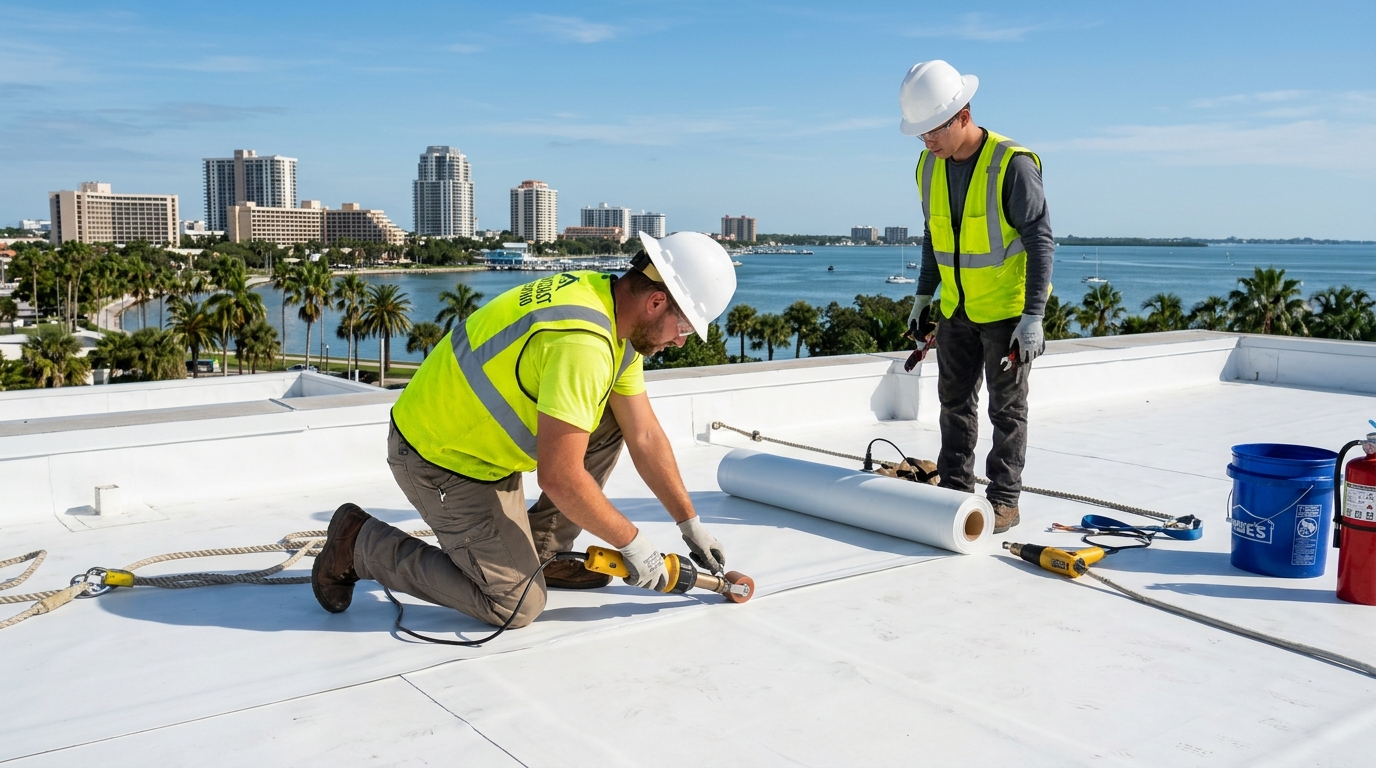
Emergency roofing technicians installing temporary moisture containment and repairing active roof leaks in Grand Rapids MI
Grand Rapids Field Operations: Dispatched technical roofing team executing Emergency Roof Leak Repair protocols under severe West Michigan atmospheric conditions.

1. Regional Microclimate Dynamics & Severe West Michigan Weather Exposure

The structural longevity of roofing envelopes in Grand Rapids and Kent County is continuously tested by atmospheric moisture streaming off Lake Michigan. As polar low-pressure systems push eastward across the lake, moisture saturation produces extreme lake-effect snow squalls followed by rapid Arctic freeze-thaw cycles. In this volatile environment, lake-effect snow meltwater forced behind shingles, ice dam head pressure, active drywall bubbling, and structural attic truss saturation represents a frequent and destructive consequence for both residential and commercial structures.

During deep winter freezes, ambient temperatures in the Grand River Valley frequently drop below zero degrees Fahrenheit, causing roofing materials to become brittle and contract. When warm indoor air escapes into under-insulated attic cavities, it triggers heavy meltwater runoff beneath the snowpack. When this moisture encounters sub-freezing eaves, gutters, or flashing intersections, ice dams form rapidly. Trapped meltwater backs up under hydrostatic pressure, penetrating beneath shingles and through seam underlayments to saturate underlying OSB sheathing, structural rafters, and interior living quarters.

Spring and autumn transitions introduce additional hazards in the form of fierce lake-effect squall lines with straight-line wind gusts exceeding 50 to 65 mph. These winds generate severe uplift along roof eaves, ridges, and windward gables, peeling away shingle tabs and lifting flashing aprons. Without immediate technical intervention, subsequent driving rain or melting snow saturates the structural substrate within hours.

Key Atmospheric Risk Factors in Grand Rapids (emergency roof leak repair Grand Rapids MI)

  • Lake-Effect Snowpack: 60 to 80+ inches of seasonal snow creating dangerous dead-load rafter stresses exceeding 25 lbs per square foot.
  • Severe Eave Ice Damming: Temperature inversions and attic thermal leakage forcing water backward past conventional shingle laps.
  • Westerly Gale Uplift: High-velocity straight-line winds tearing cold-embrittled asphalt fiberglass tabs and detaching perimeter flashings.
  • Rapid Freeze-Thaw Stress: Temperature swings spanning 40°F in twenty-four hours causing violent expansion and contraction across metal and masonry joints.

2. Non-Destructive Moisture Diagnostics & FLIR Thermal Tracing

Accurately diagnosing the point of origin for a water leak during a West Michigan winter storm is challenging because water frequently enters through an exterior breach ten to thirty feet away from where it drips inside. Water travels laterally along roof trusses, across horizontal collar ties, and down electrical conduit before pooling and penetrating drywall ceilings.

Dispatched emergency contractors utilize advanced, non-destructive diagnostic tools to track moisture pathways without causing unnecessary interior damage:

This diagnostic rigor ensures that non-destructive flir infrared moisture tracing, immediate emergency water diversion, low-pressure steam ice removal, and polymer underlayment sealing targets the true structural breach rather than merely addressing surface symptoms.

3. Step-by-Step Field Restoration & Mitigation Methodology

When on-call Michigan roofing specialists arrive at your Grand Rapids property, they follow a standardized four-phase engineering protocol to ensure maximum stabilization and structural protection:

Phase 1: Life Safety & Interior Water Divergence

Technicians immediately identify shock hazards near electrical breaker panels, isolate wet circuits, position heavy containment reservoirs, and relieve accumulated water pockets in sagging drywall ceilings by puncturing them with small-gauge needles to prevent massive ceiling collapses.

Phase 2: Surface Snow Clearance & Steam Extraction

Crews clear snowpack using non-abrasive poly blades and deploy commercial low-pressure steam extraction boilers to melt through heavy eave ice blockades without damaging underlying shingle granules or cracking brittle sheathing.

Phase 3: Structural Substrate & Membrane Tarping

Exposed sheathing or damaged sections are covered with heavy-duty 10-mil woven poly tarps mechanically secured to structural rafters using continuous 2x4 lumber battens and self-sealing fasteners, creating an airtight barrier capable of withstanding 60+ mph lake gales.

Phase 4: Insurance Claim Photographic Documentation

The technician compiles a comprehensive digital portfolio of date-stamped high-resolution photos, FLIR thermograms, and itemized Xactimate loss mitigation estimates, equipping the homeowner with authoritative proof for rapid insurance claim processing.

4. Michigan Building Code (MRC) & Contractor Licensing Compliance

All roofing mitigation and structural repairs performed in Grand Rapids must strictly adhere to the Michigan Residential Code (MRC 2015/2021) and local Kent County municipal building ordinances. Key compliance requirements enforced across our dispatched contractor network include:

5. Preventative Property Maintenance & Lake Michigan Storm Preparedness

Proactive maintenance substantially mitigates the threat of catastrophic winter roof failure in Grand Rapids. Homeowners are advised to follow these seasonal preparedness protocols:

Attic Thermal Sealing & R-Value

Seal all ceiling bypasses around chimney chases, plumbing stacks, and recessed can lights. Upgrade attic insulation to current Michigan energy code baselines (R-49 to R-60) to eliminate warm deck melting.

Soffit & Ridge Ventilation

Ensure continuous, unobstructed airflow from soffit intake vents to ridge exhaust vents. Balanced ventilation maintains a cold roof deck at near-ambient outdoor temperatures, preventing ice dam formation.

Seasonal Gutter Clearing

Remove fallen autumn leaves and debris from gutters and downspout conductors before the first hard freeze. Clogged gutters freeze solid quickly, creating the initial foundation for destructive eave ice dams.

Need Immediate Emergency Dispatch in Grand Rapids?

Do not allow active water leaks to cause ceiling collapse or dangerous electrical hazards. Connect directly with our on-call Kent County emergency coordinator now.

CLICK TO CALL DISPATCH NOW: (888) 208-4155